
The Future of Power: Understanding Conventional vs. Non-Conventional Energy Sources
The global energy landscape is at a critical turning point. As we balance industrial growth with environmental stewardship, understanding where our power comes from is more important than ever. Generally, energy sources are divided into two main categories: Conventional and Non-Conventional.
1. Conventional Energy Sources: The Traditional Giants
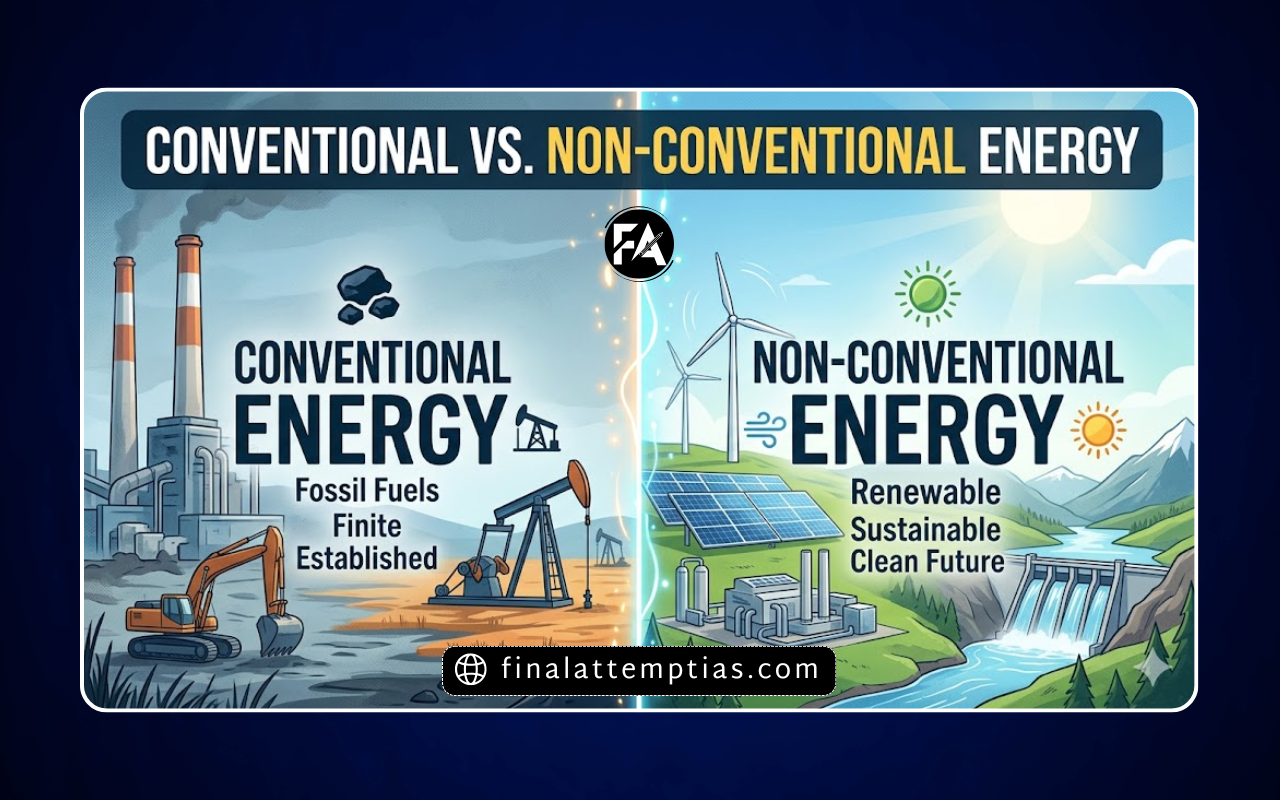
Conventional energy refers to the “old guard” of power. These are the primary drivers of the industrial revolution and remain the most widely used sources today, though they come with a high environmental price tag.
-
Definition: These sources are primarily composed of fossil fuels, including coal, oil, and natural gas.
-
The Formation Process: Fossil fuels aren’t made overnight. They are formed through the decomposition of organic matter (plants and animals) over millions of years under intense heat and specific geological pressure.
-
Non-Renewable Nature: These are finite resources. Because our rate of consumption and extraction is significantly higher than the millions of years required for natural replenishment, we are effectively “bleeding the Earth dry” of these reserves.
-
The Global Impact:
- Environmental: Their extraction and combustion lead to severe environmental degradation, including air pollution and greenhouse gas emissions.
- Geopolitical: Because these resources are geographically concentrated, they often trigger geopolitical tensions and international competition for control over limited reserves.
2. Non-Conventional Energy Sources: The Sustainable Path
As fossil fuels deplete, non-conventional sources—often referred to as renewable energy—have emerged as the essential alternative for a cleaner future.
-
Definition: These are renewable energy sources that provide a clean, modern alternative to traditional fossil fuels.
-
Key Varieties:
-
Solar: Harnessing the sun’s rays.
-
Wind: Utilizing air currents via turbines.
-
Hydroelectric: Capturing the power of flowing water.
-
Geothermal: Tapping into the Earth’s internal heat.
-
Biomass: Converting organic materials into fuel.
-
-
Sustainability: The defining feature of these resources is that they are replenished naturally and continuously. This makes them virtually inexhaustible, ensuring energy security for generations to come.
Why the Shift Matters: Benefits of Clean Energy
Transitioning from conventional to non-conventional energy isn’t just a trend; it’s a necessity for planetary health. The primary benefits include:
-
Minimizing Ecological Footprints: Unlike coal or oil, renewable sources produce little to no greenhouse gases during operation.
-
Energy Independence: By utilizing natural elements like wind and sun, countries can reduce their reliance on volatile, carbon-heavy global energy supplies.
-
Long-Term Viability: Investing in non-conventional energy provides a sustainable energy solution that doesn’t run out, stabilizing costs and protecting the environment simultaneously.
Key Takeaway: While conventional energy built the modern world, non-conventional energy will be what preserves it.